And here is the second of my quick-hit animal-related review columns. This one focuses on a pair of bands I tried out on a whim, and a pair of new albums I'm not completely sold on. Foals (above) are an impressive outfit from Oxford, and their third record is called Holy Fire. It's more danceable and has more hit potential than anything they've done. And Local Natives hail from Los Angeles, and their second record is called Hummingbird. It's a more sedate affair, thanks largely to their choice of producer, and while it doesn't leave me cold, it does make me yawn.
As always, check out the column at the main site, then head back here to talk about it.
Thursday, February 21, 2013
Monday, February 18, 2013
Frank Zappa Buyer's Guide #5: Cruising With Ruben and the Jets
Some artists like to keep their audiences on their toes.
Frank Zappa liked to keep his in a state of perpetual bewilderment.
There’s no other way to explain Cruising with Ruben and the Jets, Zappa’s third album of 1968. After
mercilessly lampooning straight-ahead rock and R&B for years, suddenly here
is an album on which Zappa and his Mothers lovingly perform tunes that could be
1950s standards, without a trace of irony. Even songs that were played as
parody on Freak Out appear here,
completely straight.
It was released under the Ruben and the Jets moniker, with
only a word balloon on the front cover to give the game away: “Is this the
Mothers of Invention recording under a different name in a last-ditch attempt
to get their cruddy music on the radio?” The original Mothers, of course, were
a mainstream R&B band before Zappa took the reins, so in an odd way, this
feels like a prequel rather than the next chapter of the MOI story.
Zappa plays the farce to the hilt, inventing a backstory for
Ruben Sano and his band – one that has more to do with cars and girls and
greasy hairdos than music. The packaging may lead you to expect some sarcasm
here, some acknowledgement that this music is somehow beneath the band that
created We’re Only In It for the Money.
But besides Zappa’s description of the proceedings as “an album of cretin
simplicity,” there’s nothing here to suggest that this is not a labor of love.
In fact, the only logical conclusion is that Zappa truly adores
this type of music. He would return to it again and again, dropping R&B
covers like “Valerie” and “The Closer You Are” onto his albums, and recording
and releasing a ditty called “Sharleena” more times than just about any other
song of his. The Mothers sound comfortable with this greasy, repetitive
material, and singers Ray Collins and Roy Estrada give it their all, bringing
real heart to the performances.
Cruising With Ruben
and the Jets includes five songs from Freak Out, here remade as rhythm and
blues tunes. “I’m Not Satisfied,” a burst of energetic rock on Freak Out, is
smoothed out into a 6/8 ballad with “da-da-da” backing vocals. “Any Way the
Wind Blows” is similarly slowed down and prettied up. Even “You Didn’t Try to
Call Me,” a savage parody in its original incarnation, is here transformed into
the very thing it was parodying.
Zappa’s new songs continue in the same vein. The lyrics, of
course, are darker than one would expect from ‘50s R&B – “Cheap Thrills” is
about exactly what you’d expect, its three-chord rhythm an endless bit of
juvenile giddiness. Closer “Stuff Up the Cracks” finds our lovelorn protagonist
giving up and committing suicide, turning on the car in his garage and
listening to the radio as he dies.
But others, like the silly “Jelly Roll Gum Drop,” are as
innocent as they sound. And with “Anything,” Zappa proved that he could write a
truly lovely song, without any of his signature contempt. The Mothers’
willingness to dive straight into this sound and craft this record with such
love makes Ruben and the Jets a
delightful little listen.
Too bad you can’t buy that version of the album anymore, at
least not under its original name. In 1984, Zappa decided to re-record very
‘80s-sounding bass and drums onto all but the closing track, and that’s the
only version available in stores. The disconnect between the rhythm section and
the rest of the performances here cannot be overstated – the heavily reverbed
drums and bass essentially turn this into the parody that it worked so hard not
to be. It’s disastrous.
And it’s a shame, because Zappa would never make another
record like Cruising With Ruben and the
Jets. It’s a simple, let-your-hair-down kind of record, created with
genuine affection, and celebrating an era that, despite Zappa’s commitment to complexity
and boundary-pushing, would continue to inspire him. It’s nothing essential,
and your Zappa collection would be complete without it, but taken for what it
is, Ruben and the Jets is a lot of
fun.
Rating: Skippable
Which version to buy:
Unless you track down the original vinyl, it doesn’t matter. Every CD version
of Cruising With Ruben and the Jets,
including the 2012 re-release, is the 1984 train wreck. Zappa’s alterations
ruin the entire feel of the album, and while the ‘80s version is a curiosity,
it’s not much fun to listen to. If you want to hear the original 1968 mix of
the album, you have to buy the Greasy
Love Songs Project/Object from the Zappa website.
Next week: Uncle Meat.
Wednesday, February 13, 2013
New Column: Animal Joy Part One
This week and next, we're taking a look at bands and albums with animal names. I've definitely had weaker justifications for grouping reviews together, but damn if I can't remember one right now.
Still, this week's two subjects are splendid little records. The Eels return after a three-year break with a full-band effort that stands with their best, and Frightened Rabbit (above) expand their sound on a fourth album bursting with gigantic melodies and intricate lyrics. Read all about it at the main site, then head back here to leave me a comment. Thanks for reading!
Monday, February 11, 2013
Frank Zappa Buyer's Guide #4: We're Only In It for the Money
The Mothers’ third album, We’re Only In It for the Money, is widely considered Frank Zappa’s
masterpiece. It’s certainly his sharpest and most focused piece of social
criticism, his most finely honed parody, and his most prophetic and (arguably)
most relevant work. If these are the qualities you’re looking for in a Zappa
album, you won’t do better than this one.
Money was the first of four albums that grew from the No Commercial Potential sessions, an extended stay at Apostolic Studios in New York. (The re-edited Lumpy Gravy was the second.) It hit stores in March of 1968, during the apex of flower power, while kids across the country were still singing “All You Need is Love.” But those were the clean-cut suburban kids, not the “freaks” of Zappa’s audience. Zappa considered the Beatles to be representative of the corporatization of America, and was determined to speak from a different perspective.
And because he was Frank Zappa, that perspective came with teeth. Zappa saw a hippie movement that he found ridiculous, a violent Los Angeles police force cracking down on “freaks,” and a society that not only condoned this but encouraged it. The civilization of the ‘60s was rotting from the inside, Zappa believed, and if you expected lasting change to come from a love-in, you were part of the problem.
Structurally, Money and Lumpy Gravy are two sides of the same coin. (The cover art links them as “phazes” of one another.) Money is another triumph of editing, as beautiful, melodic songs are spliced together with sound effects, electronic noise sculptures and dialogue to create a cohesive whole. It would still be 18 months before Abbey Road hit stores, but Zappa was showing the Beatles how the side-long suite thing was done.
But while Gravy was the work of Zappa the orchestral composer, Money is Zappa the tricky pop craftsman. The songs do a fine job of parodying the acoustic ‘60s hippie sound, and they straddle the line between melodic and complex with ease. There are eight Mothers on this album, with the addition of incredible pianist Ian Underwood and saxophonist Motorhead Sherwood, and the sound is vibrant. It remains parody throughout, but the songs are no joke.
In fact, this album – despite its Sgt. Pepper-mocking cover and ironic title – contains some of Zappa’s most straightforward songs. He rarely cuts to the heart of things as he does on “Mom and Dad,” a chilling lament for a teenage “freak” killed by police. “You sit home and drink all night, they look too weird, it served them right,” Zappa sings, launching a familiar attack, but giving it more resonance. “Ever wonder why your daughter looks so sad? It’s such a drag to have to love a plastic mom and dad.”
Money plays like a single piece, darting from one memorable melodic snippet to another, but never staying in one place for very long. The album is remarkably busy, ideas flying by at light speed. Zappa interrupts songs with pig snorts, whispers and general insanity, and abandons melodies as quickly as they arrive. Just as a pop gem like “Lonely Little Girl” gets going, it dissipates, on to the next.
Thanks to pitch-shifted vocals and a production style that can sometimes seem cartoony – just listen to the simultaneous monologues, one in each speaker, on “Flower Punk” – this album feels surreal, like you can’t trust it. It’s one of Zappa’s most sincere pieces of work, and his tongue is still firmly in his cheek.
Zappa’s anything-is-music aesthetic is in full bloom here as well, with no less than five of these tracks given over to noise and dialogue. The album ends with “The Chrome-Plated Megaphone of Destiny,” a six-minute collage of sped-up pianos, woodwinds, laughter, static and other seemingly random sounds. But careful listening will reveal that this song is as carefully composed as anything else on the album. As a bonus, it ends with a weak pluck on a piano string that fades out over a full minute, the final touch of the album’s Sgt. Pepper parody.
This album definitely holds up to any amount of analysis, but none of that will get at the sheer visceral thrill of listening to this thing. We’re Only In It for the Money is savage, an absolutely freewheeling excoriation of the 1960s, like lobbing grenades along the Magical Mystery Tour. Its first side viciously attacks hippie culture – Zappa only requires the 2:34 of “Who Needs the Peace Corps” to set fire to the San Francisco scene that birthed the Grateful Dead. “I’ll stay a week and get the crabs and take a bus back home, I’m really just a phony but forgive me ‘cause I’m stoned…”
“Concentration Moon” and “Mom and Dad” call out police for cracking down on those hippies, talking about “cops killing creeps” two years before the Kent State shootings in Ohio. In “Harry, You’re a Beast,” Zappa continues the theme of “Brown Shoes Don’t Make It,” pointing at a complacent society as the root cause of the rot. He answers the question of “What’s the Ugliest Part of Your Body” with “I think it’s your mind,” and he never penned a more potent verse than the one that ends that song: “All your children are poor unfortunate victims of systems beyond their control, a plague upon your ignorance that keeps the young from the truth they deserve…”
“Absolutely Free” co-opts the sound and language of hippies to instruct them on how to actually shake off their shackles. (Zappa is, as ever, distrusting of his rock audience’s intelligence: “The first word in this song is ‘discorporate,’” he intones with a sardonic grin. “It means to leave your body.”) “Flower Punk” goes so far as to directly reference “Hey Joe,” a hit for Jimi Hendrix in 1966, as it mercilessly assaults the flower power mentality.
The second side is less focused – Zappa takes a three-song break to tell you about childhood friends who saved their snot in jars – but it all leads to the remarkable string of short pieces from “Lonely Little Girl” to “Mother People.” “Take Your Clothes Off When You Dance” is one of Zappa’s most hummable melodies, and the sarcastic vocal tone clearly shows how idiotic he thinks its sentiment is. That is driven home by the reprise of “What’s the Ugliest Part of Your Body.”
But it’s “Mother People” that feels like the mission statement here. “We are the other people, you’re the other people too,” Zappa sings over one of his most kinetic rock compositions. It’s an invitation – if you’ve found yourself agreeing with this album, and that makes you an outsider, the Mothers are waiting for you. But heed the final verses: “Do you think that I love you, stupid and blind? Do you think that I dream through the night of holding you near me?” Zappa’s savage wit would turn and bite even some of his most ardent fans as time went on.
Zappa’s bleak view of society would never dissipate either, although he would slip into paranoia in his later years (Thing-Fish, Meets the Mothers of Prevention). We’re Only In It for the Money finds Zappa the satirist and social critic in perhaps the finest form of his career – so fine that many were disappointed when he turned to other lyrical and musical pursuits. It remains one of his most important albums, and one of his very best.
Rating: Essential, clearly.
Which version to get: This is kind of tricky. When Verve Records received the master for Money, they took umbrage at two sections (The repeated “don’t come in me” in “Harry, You’re a Beast” and the “shitty little person” verse of “Mother People”), and edited them without Zappa’s knowledge. Frank reversed that decision when he remixed Money in 1984. Unfortunately, he also overdubbed horrific-sounding ‘80s drums and bass on the entire album, completely ruining it. For years, this was the only version available on CD – if you see a two-fer Ryko CD with this and Lumpy Gravy on it, run away quickly.
The 1995 Ryko CD restores the original vinyl version of the album, with digital tweaking, which means the “offending” sections are once again censored. The 2012 Zappa/Universal reissue uses the same master, which means it doesn’t matter which of those you get. However, the 2012 version features, for the first time ever, the hilarious Sgt. Pepper parody on the front cover, where it belongs. (Record company politics have kept it sequestered inside since 1968.) That makes the new version the one to get.
Additionally, if you want to hear the original vinyl mix of the record, you need the Lumpy Money Project/Object from the Zappa Family Trust. That set also includes the 1984 abomination, if you’re curious about that.
Next week: Cruising With Ruben and the Jets.
Money was the first of four albums that grew from the No Commercial Potential sessions, an extended stay at Apostolic Studios in New York. (The re-edited Lumpy Gravy was the second.) It hit stores in March of 1968, during the apex of flower power, while kids across the country were still singing “All You Need is Love.” But those were the clean-cut suburban kids, not the “freaks” of Zappa’s audience. Zappa considered the Beatles to be representative of the corporatization of America, and was determined to speak from a different perspective.
And because he was Frank Zappa, that perspective came with teeth. Zappa saw a hippie movement that he found ridiculous, a violent Los Angeles police force cracking down on “freaks,” and a society that not only condoned this but encouraged it. The civilization of the ‘60s was rotting from the inside, Zappa believed, and if you expected lasting change to come from a love-in, you were part of the problem.
Structurally, Money and Lumpy Gravy are two sides of the same coin. (The cover art links them as “phazes” of one another.) Money is another triumph of editing, as beautiful, melodic songs are spliced together with sound effects, electronic noise sculptures and dialogue to create a cohesive whole. It would still be 18 months before Abbey Road hit stores, but Zappa was showing the Beatles how the side-long suite thing was done.
But while Gravy was the work of Zappa the orchestral composer, Money is Zappa the tricky pop craftsman. The songs do a fine job of parodying the acoustic ‘60s hippie sound, and they straddle the line between melodic and complex with ease. There are eight Mothers on this album, with the addition of incredible pianist Ian Underwood and saxophonist Motorhead Sherwood, and the sound is vibrant. It remains parody throughout, but the songs are no joke.
In fact, this album – despite its Sgt. Pepper-mocking cover and ironic title – contains some of Zappa’s most straightforward songs. He rarely cuts to the heart of things as he does on “Mom and Dad,” a chilling lament for a teenage “freak” killed by police. “You sit home and drink all night, they look too weird, it served them right,” Zappa sings, launching a familiar attack, but giving it more resonance. “Ever wonder why your daughter looks so sad? It’s such a drag to have to love a plastic mom and dad.”
Money plays like a single piece, darting from one memorable melodic snippet to another, but never staying in one place for very long. The album is remarkably busy, ideas flying by at light speed. Zappa interrupts songs with pig snorts, whispers and general insanity, and abandons melodies as quickly as they arrive. Just as a pop gem like “Lonely Little Girl” gets going, it dissipates, on to the next.
Thanks to pitch-shifted vocals and a production style that can sometimes seem cartoony – just listen to the simultaneous monologues, one in each speaker, on “Flower Punk” – this album feels surreal, like you can’t trust it. It’s one of Zappa’s most sincere pieces of work, and his tongue is still firmly in his cheek.
Zappa’s anything-is-music aesthetic is in full bloom here as well, with no less than five of these tracks given over to noise and dialogue. The album ends with “The Chrome-Plated Megaphone of Destiny,” a six-minute collage of sped-up pianos, woodwinds, laughter, static and other seemingly random sounds. But careful listening will reveal that this song is as carefully composed as anything else on the album. As a bonus, it ends with a weak pluck on a piano string that fades out over a full minute, the final touch of the album’s Sgt. Pepper parody.
This album definitely holds up to any amount of analysis, but none of that will get at the sheer visceral thrill of listening to this thing. We’re Only In It for the Money is savage, an absolutely freewheeling excoriation of the 1960s, like lobbing grenades along the Magical Mystery Tour. Its first side viciously attacks hippie culture – Zappa only requires the 2:34 of “Who Needs the Peace Corps” to set fire to the San Francisco scene that birthed the Grateful Dead. “I’ll stay a week and get the crabs and take a bus back home, I’m really just a phony but forgive me ‘cause I’m stoned…”
“Concentration Moon” and “Mom and Dad” call out police for cracking down on those hippies, talking about “cops killing creeps” two years before the Kent State shootings in Ohio. In “Harry, You’re a Beast,” Zappa continues the theme of “Brown Shoes Don’t Make It,” pointing at a complacent society as the root cause of the rot. He answers the question of “What’s the Ugliest Part of Your Body” with “I think it’s your mind,” and he never penned a more potent verse than the one that ends that song: “All your children are poor unfortunate victims of systems beyond their control, a plague upon your ignorance that keeps the young from the truth they deserve…”
“Absolutely Free” co-opts the sound and language of hippies to instruct them on how to actually shake off their shackles. (Zappa is, as ever, distrusting of his rock audience’s intelligence: “The first word in this song is ‘discorporate,’” he intones with a sardonic grin. “It means to leave your body.”) “Flower Punk” goes so far as to directly reference “Hey Joe,” a hit for Jimi Hendrix in 1966, as it mercilessly assaults the flower power mentality.
The second side is less focused – Zappa takes a three-song break to tell you about childhood friends who saved their snot in jars – but it all leads to the remarkable string of short pieces from “Lonely Little Girl” to “Mother People.” “Take Your Clothes Off When You Dance” is one of Zappa’s most hummable melodies, and the sarcastic vocal tone clearly shows how idiotic he thinks its sentiment is. That is driven home by the reprise of “What’s the Ugliest Part of Your Body.”
But it’s “Mother People” that feels like the mission statement here. “We are the other people, you’re the other people too,” Zappa sings over one of his most kinetic rock compositions. It’s an invitation – if you’ve found yourself agreeing with this album, and that makes you an outsider, the Mothers are waiting for you. But heed the final verses: “Do you think that I love you, stupid and blind? Do you think that I dream through the night of holding you near me?” Zappa’s savage wit would turn and bite even some of his most ardent fans as time went on.
Zappa’s bleak view of society would never dissipate either, although he would slip into paranoia in his later years (Thing-Fish, Meets the Mothers of Prevention). We’re Only In It for the Money finds Zappa the satirist and social critic in perhaps the finest form of his career – so fine that many were disappointed when he turned to other lyrical and musical pursuits. It remains one of his most important albums, and one of his very best.
Rating: Essential, clearly.
Which version to get: This is kind of tricky. When Verve Records received the master for Money, they took umbrage at two sections (The repeated “don’t come in me” in “Harry, You’re a Beast” and the “shitty little person” verse of “Mother People”), and edited them without Zappa’s knowledge. Frank reversed that decision when he remixed Money in 1984. Unfortunately, he also overdubbed horrific-sounding ‘80s drums and bass on the entire album, completely ruining it. For years, this was the only version available on CD – if you see a two-fer Ryko CD with this and Lumpy Gravy on it, run away quickly.
The 1995 Ryko CD restores the original vinyl version of the album, with digital tweaking, which means the “offending” sections are once again censored. The 2012 Zappa/Universal reissue uses the same master, which means it doesn’t matter which of those you get. However, the 2012 version features, for the first time ever, the hilarious Sgt. Pepper parody on the front cover, where it belongs. (Record company politics have kept it sequestered inside since 1968.) That makes the new version the one to get.
Additionally, if you want to hear the original vinyl mix of the record, you need the Lumpy Money Project/Object from the Zappa Family Trust. That set also includes the 1984 abomination, if you’re curious about that.
Next week: Cruising With Ruben and the Jets.
Saturday, February 9, 2013
First Listen: Fiction Family Reunion
The combination of Switchfoot's Jon Foreman and Nickel Creek's Sean Watkins may seem like a weird one, but it works far better than you'd expect. Fiction Family's wittily-titled second record is less immediate and less pop than their first, its songs slowly working its way into your brain. It opens weakly with "Avalon," but by the time the quick and splendid "Damaged" rolls around, the band is on all cylinders.
"God Badge" continues Foreman's one-man war against religious arrogance: "Put your God badge down and love someone." It's a sentiment this reviewer never tires of. Watkins gets to show his bluegrassy stuff on "Just Rob Me," and Foreman's world-weary voice works well on "Give Me Back My Girl." Once again, Fiction Family has proven that this strange alchemy can make gold.
Wednesday, February 6, 2013
New Column: They Found Now
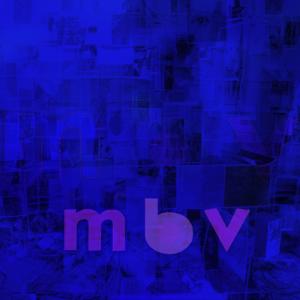
My Bloody Valentine.
If you were around and listening to music in 1991, chances are good that those three words in that order mean a great deal to you. In '91, they released an album called Loveless that changed everything, influencing countless bands that came after them. And then they disappeared, evaporating into a cloud of broken promises and false hopes for more than 21 years.
And chances are, you were just as surprised as I was when, on Saturday night, My Bloody Valentine released their first new album in more than two decades. I can still hardly believe that it exists. But it's here, and it's real, and it's the subject of this week's column. Can it possibly live up to the classic that preceded it, and be worth the two-decade-long wait? (I'll give you a hint: the column is subtitled "My Bloody Valentine's Miraculous Return.")
Read all about it on the main tm3am site. Then head back here to leave me a comment. Then head to mybloodyvalentine.org and buy the damn thing, if you haven't already. After more than 21 years, the wait is over.
If you were around and listening to music in 1991, chances are good that those three words in that order mean a great deal to you. In '91, they released an album called Loveless that changed everything, influencing countless bands that came after them. And then they disappeared, evaporating into a cloud of broken promises and false hopes for more than 21 years.
And chances are, you were just as surprised as I was when, on Saturday night, My Bloody Valentine released their first new album in more than two decades. I can still hardly believe that it exists. But it's here, and it's real, and it's the subject of this week's column. Can it possibly live up to the classic that preceded it, and be worth the two-decade-long wait? (I'll give you a hint: the column is subtitled "My Bloody Valentine's Miraculous Return.")
Read all about it on the main tm3am site. Then head back here to leave me a comment. Then head to mybloodyvalentine.org and buy the damn thing, if you haven't already. After more than 21 years, the wait is over.
Monday, February 4, 2013
Frank Zappa Buyer's Guide #3: Lumpy Gravy
If Zappa’s first two albums were statements of purpose, his
third, Lumpy Gravy, was a statement
of philosophy.
Whatever you are expecting when you press play on this
thing, the album will defy those expectations. The cover promises a piece “that
started out to be a ballet, but probably didn’t make it,” performed by a group
with the absurd name of The Abnuceals Emuukha Electric Symphony Orchestra and
Chorus. On the back cover, Zappa is dressed in a top hat and tails, sneering at
you as he hands you his white gloves.
Is Lumpy Gravy an
orchestral piece, the present-day composer taking up his baton for the first
time on record? Well, it started that way. Capitol Records paid Zappa to
produce “something with an orchestra,” and after 11 days of intensive
composition and a $40,000 session with 50 musicians, Zappa emerged with a
22-minute piece, designed as an oratorio. It was entirely instrumental, and
contained some of his most indelible melodies.
Capitol released the original Lumpy Gravy in 1967, but MGM/Verve Records cried foul, citing an
ongoing contract with Zappa as a recording artist. The record was pulled, and
copies of it are very rare. (The Zappa Family later released the original Lumpy Gravy on the three-CD Lumpy Money Project/Object.) And if
Zappa had been a less imaginative artist, that might have been it.
But in late 1967, Zappa and the Mothers entered a studio in
New York City to begin working on a pile of material with the working title of No Commercial Potential. (Verve must
have loved that.) As part of this project, Zappa extensively reworked Lumpy Gravy, re-releasing this entirely
new beast in May of 1968. (In a way, Lumpy
Gravy is both Zappa’s third and fifth album.) And if the original Lumpy Gravy was a straightforward
showcase for Zappa’s composing skills, the new one does nothing less than
illuminate his view of music’s place in our universe.
Like “Brown Shoes Don’t Make It,” all of Lumpy Gravy was assembled in the editing
room, stitched together splice by splice, placing disparate elements next to
each other and watching how they combine. The original orchestral music is
here, but it now shares space with percussive flourishes, electronic noise,
snippets of Mothers jam sessions and loads of dialogue.
It would be a mistake, however, to think of this album as
orchestral pieces stitched together with non-musical interludes. That’s missing
the point entirely – to Zappa, this is all music, all part of the same
composition. In fact, that’s the entire message of the album, a message that
would reverberate through the rest of Zappa’s career. And to grasp it, you have
to listen to the dialogue.
During his extended stay at Apostolic Studios in New York,
Zappa recorded hours of spoken word improvisations. If you visited the studio
while the Mothers were there, chances are you ended up on tape. Zappa would
maneuver his subjects underneath the lid of the studio’s grand piano for added
resonance, and give them topics to discuss. He then edited that dialogue into a
loose story about people trapped in a piano, kept captive by marauding bands of
pigs and ponies, and by their own fear.
It’s easy to extrapolate that the pigs are police officers
and the ponies are long-haired hippies, two of the targets of the
concurrently-recorded We’re Only In It for
the Money. The piano denizens try to understand the fight between the two
factions, but they’re simple folk, as noted in the section about working at gas
stations. (Note the snippet of “Louie Louie,” Zappa’s common-folk call sign.
Note also a later song called “Wind Up Working in a Gas Station” with the same
theme, albeit more sarcastic.) They end up even more scared and confused and the
music veers chaotically from melody to dissonance, depicting this confusion.
The most important moment of the record, however, occurs in
the first section. (Lumpy Gravy is
two 16-minute pieces of music, with no track breaks.) One of the piano denizens
suggests that the entire universe is comprised of a single musical note, and
everything we know grew out of that. It’s a fairly sensible conclusion for
someone who lives in a musical instrument to come to, and actually has some
basis in astrophysics. But as a metaphor for the album, and for Zappa’s entire
career, it’s perfect.
There are no musical boundaries on Lumpy Gravy. The opening movements (which went on to become “Theme
From Lumpy Gravy” and “Oh No”) are unreservedly melodic, even jaunty, Zappa’s
players blurring the lines between rock and orchestral music. As things
progress, we get sped-up horn fanfares, percussion sculptures, grating metallic
noise, a snippet of Mothers track “King Kong,” and near the end, a long,
dissonant, Stravinsky-inspired piece for strings that sounds tense and
uncomfortable. And then things end with a blissful instrumental run-through of
“Take Your Clothes Off When You Dance.”
It’s all the same music to Zappa, all flowing from the same
source, the same note. It’s impossible to overstate how important this concept
is to understanding the man’s catalog. For the next 25 years, Zappa would
explore dozens of different types of music, smashing them together and editing
them right next to each other, and he assumed from this moment forward that his
audience was down with that.
Zappa considered Lumpy
Gravy such an important statement that he continued and completed the story
it tells in his final work, Civilization
Phaze III, released after his death in 1993. If you can listen to the 32
minutes of Lumpy Gravy without
skipping sections, or dismissing some parts as non-musical, you’ll be ready for
anything the rest of his more difficult work will throw at you. It’s not an
easy listen, but it is definitely a rewarding one.
Rating:
Essential.
Which version to buy:
Unless you seek out the original vinyl, there really is only one version to
buy. Both the 1995 Ryko and 2012 Zappa/Universal CDs use the same digital
master, created in 1993, and it sounds fine. If you want to hear the first
version of Lumpy Gravy, you should
pick up the Lumpy Money Project/Object
from the Zappa family. (You should buy that anyway, because it’s fantastic.)
Next Week: We’re Only In It for the Money.
Subscribe to:
Posts (Atom)